
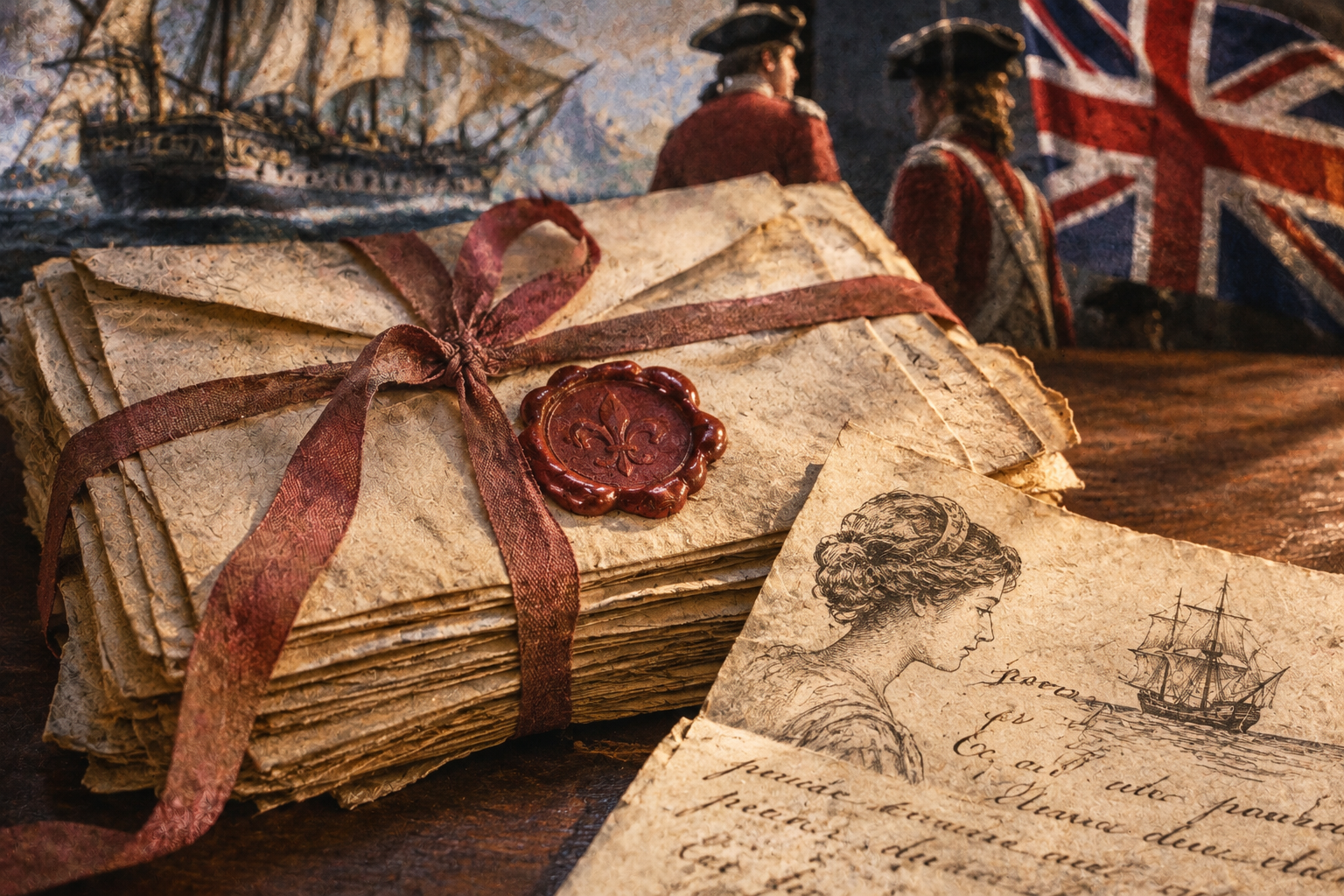
In an archive near London sat a box of more than 100 letters that had stayed sealed since 1758. They were very small, and they were tied together in three bundles with ribbon.
There were 104 in all, written in 1757 and 1758. The box belonged to Britain's National Archives at Kew, where the country keeps its official records. For more than two and a half centuries, it sat in storage.
Then a historian from Cambridge University, Professor Renaud Morieux, asked to see it. “I only ordered the box out of curiosity,” he said later.
The letters were sealed, so he asked the archivist whether they could be opened. The archivist opened them.
They were in French. The spelling was wild, there was no punctuation and there were no capital letters, and the words filled every inch of the expensive paper. It would take Morieux months to decode them.
They had been written in wartime by the wives, fiancées, parents and siblings of French sailors. Most of the writers had not held the pen themselves. They had spoken their words to a scribe.
Some were love letters, and some were family arguments. More than half were signed by women. All of them were addressed to men on board one French ship.
Not one of those sailors had ever read them.
“I realized I was the first person to read these very personal messages since they were written,” Morieux said. “Their intended recipients didn't get that chance. It was very emotional.”
Why had they never been delivered? And what had happened to the people who wrote them?