
Austin, Texas. 2018.
Laura Young ran an antiques business called Temple of Vintage. Part of her work was hunting through Goodwill, a chain of charity thrift stores, for pieces she could resell. Goodwill sells whatever people donate, from old lamps to dishes to furniture, at low prices.
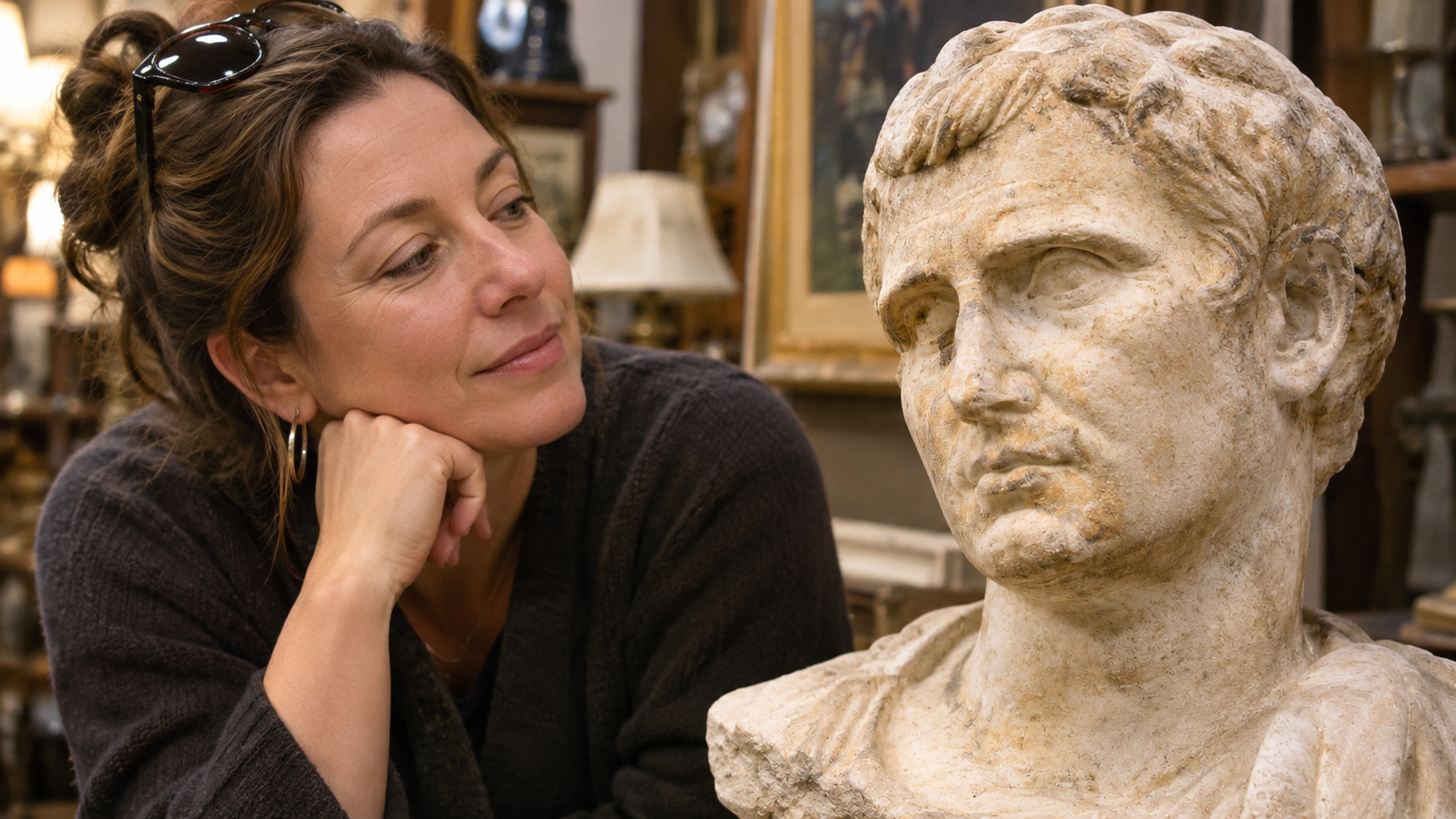
That day, she found a marble bust, a sculpture of a man's head and shoulders. She paid $34.99 for it.
She had no idea who the man was. She did not know how old the stone was, or how it had ended up in a thrift store in Texas.
There is a photo of the bust in her car. It sits buckled into the seat like a passenger. A yellow price tag is still stuck to its cheek.
Young looked at it closely. The marble was old and worn.
“He looked Roman,” she said later. “He looked old.”
She had a hunch the bust was worth far more than she had paid. But a hunch was not proof.
Either she had bought a cheap decoration, or something far older and far more important. She needed someone who could tell her which.
So she started asking. She contacted experts in classics, the study of ancient Greece and Rome, and in art history at the University of Texas at Austin. She called auction houses across the United States.
While she searched, the bust stayed in her house. The search would take about four years. Looking back, Young summed up that time in one short sentence.
“He looked great in the house while I had him.”