
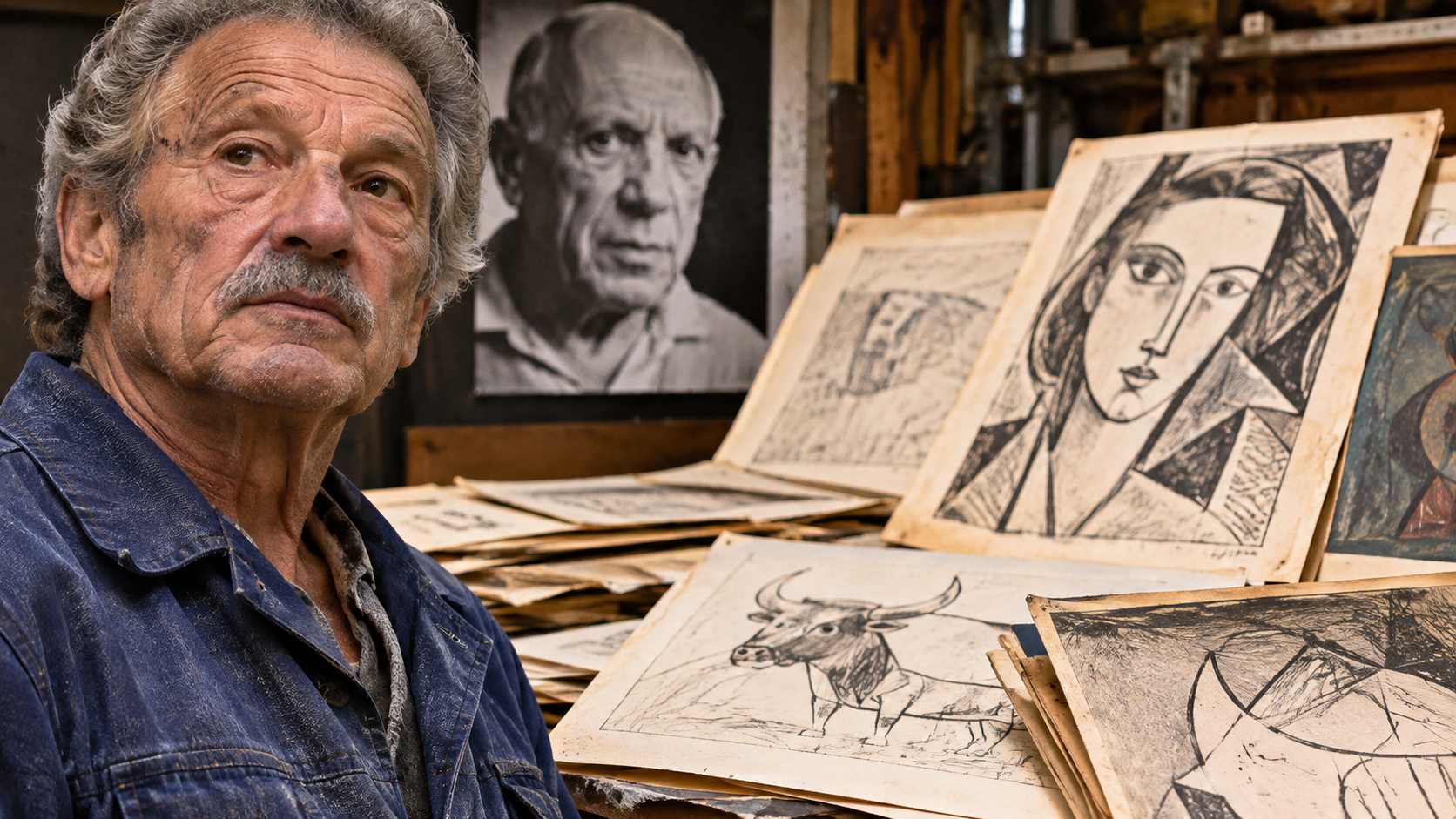
In September 2010, Pablo Picasso's former electrician and his wife walked into the Paris office that guards the artist's legacy. They had brought a suitcase of works the art world had never seen.
The electrician was Pierre Le Guennec. In the early 1970s, he had worked for Picasso at the artist's villa on the French Riviera, and installed an alarm system there. Now in his 70s, he and his wife, Danielle, lived near Cannes.
The office was the Picasso Administration, run by the artist's son, Claude Ruiz-Picasso. It is where the family decides whether a work is genuine, and its approval matters. Without a certificate of authenticity, a Picasso is very hard to sell.
That was what the couple wanted: certificates. Claude had asked them to bring the works in person, because he could not verify them from photographs.
So the couple came to Paris, suitcase in hand. In total, they said, they had 271 works.
Claude looked through them. They were real: his father's work, made between 1900 and 1932. Among them were nine rare Cubist collages, from the style Picasso helped create, and a work from his famous Blue Period.
Experts would value the whole collection at tens of millions of euros.
And not one of the works had ever appeared in any book or inventory of Picasso's art. Until that day, as far as the art world knew, they did not exist.
One unknown Picasso would make headlines. This electrician had 271.
How does an electrician come to own a hidden collection like that? And why had nobody ever seen it?