
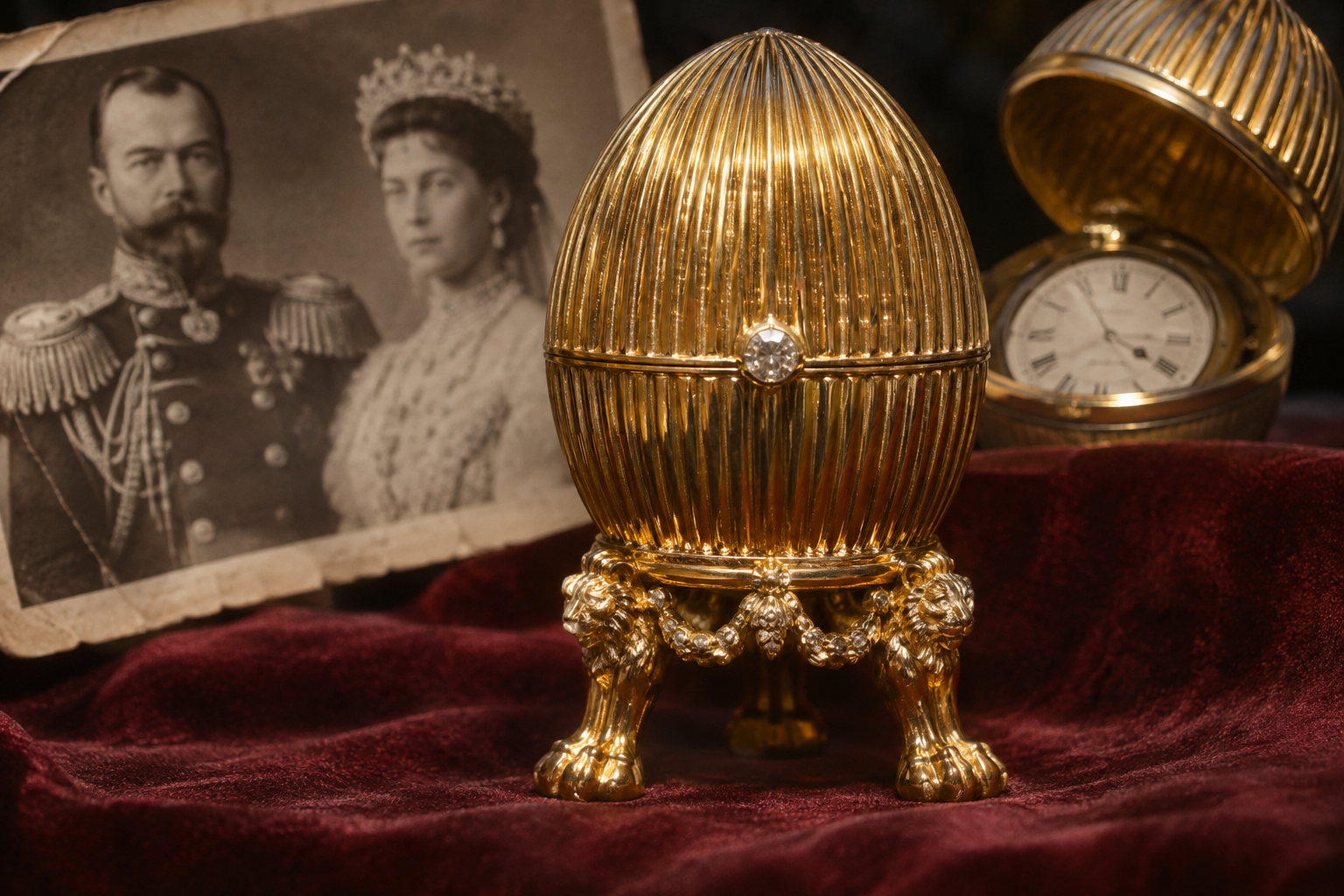
A scrap metal dealer in the American Midwest paid about $14,000 for a small gold egg at a bric-a-brac market, the kind of place where secondhand odds and ends change hands. He was not buying it to keep.
He planned to sell it to a buyer who would melt it down for its gold. If all went well, he expected to make a profit of about $500.
In other words, he was putting $14,000 on the line to make $500. It was a thin margin, but a simple deal.
The egg was a pretty thing. It was made of ridged yellow gold and stood a little over three inches tall, small enough to sit in the palm of a hand. It rested on a jeweled gold stand with feet shaped like lion's paws.
Press a diamond, and the top opened to reveal a tiny watch. A maker's name was engraved on it.
To the dealer, the craftsmanship hardly mattered. In the scrap trade, gold is bought and sold by weight, and once the egg was melted, only the gold would be left.
That was where he went wrong. He had overestimated how much the gold was worth.
He offered the egg to potential buyers. Not one of them would pay his asking price.
The egg he had bought for a quick, small profit had become a financial burden. Every day it sat unsold, his $14,000 sat with it.
He was stuck with a gold egg nobody wanted. It sat in his home, waiting for a buyer who never came.