
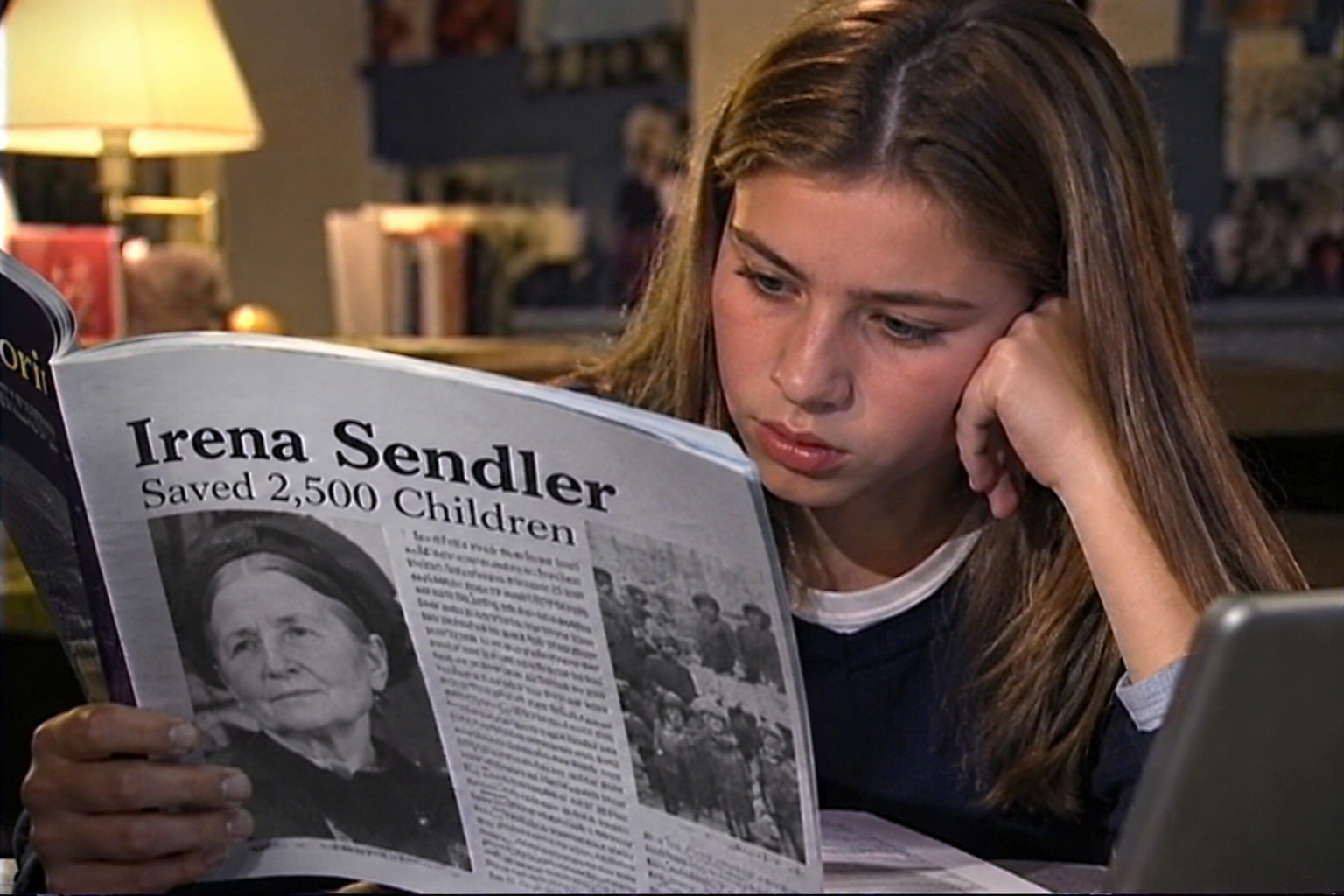
Uniontown, Kansas. 1999.
A 14-year-old named Liz Cambers is looking for a topic for a history contest. In an old magazine article from 1994, she comes across a single, short sentence.
"Irena Sendler saved 2,500 children from the Warsaw Ghetto in 1942-43."
World War II has been over for more than half a century. The woman in that sentence risked her life for every one of those children.
Liz has never heard the name. The Warsaw Ghetto was the walled-off area where the Nazis imprisoned the city's Jews. How could a woman save 2,500 children from it and end up almost forgotten?
She and two classmates decide to find out, with the help of their teacher.
Over the next months, the story they piece together will involve coffins, ambulances, a death sentence, and a Polish social worker who buried 2,500 children's names in jars under an apple tree.
And, eventually, news from New York.