
Grand Rapids, Minnesota. August 28, 2005.
It is shortly after 2 a.m. in the small town where Judy Garland grew up. Garland became world famous as Dorothy in the 1939 film The Wizard of Oz, and the town has a museum in her name.
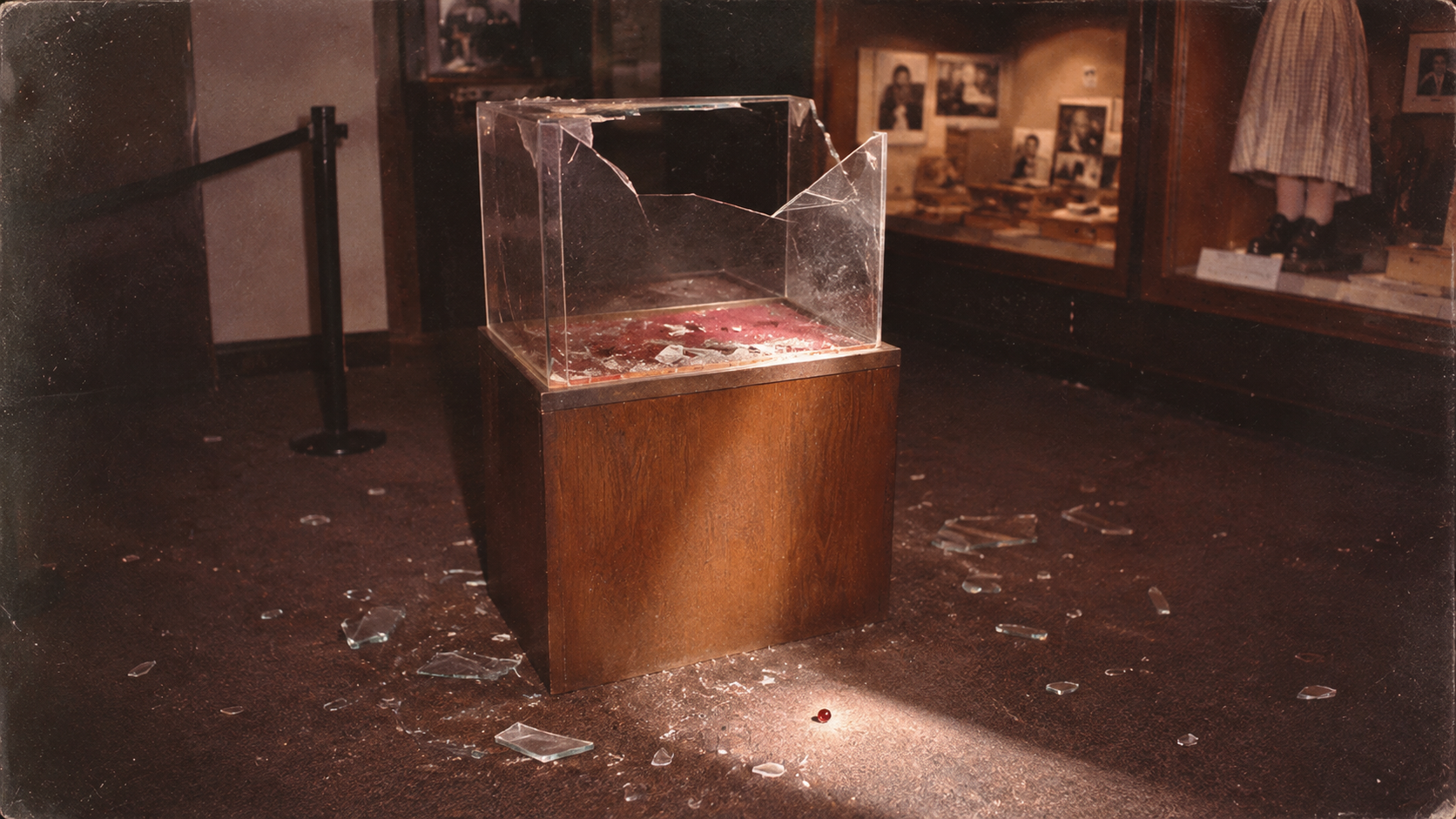
Tonight, someone is breaking into it. The glass in the museum's back door shatters.
Inside, in a Plexiglas case, sit the ruby slippers. They are one of the few surviving pairs of the sparkling red shoes Garland wore as Dorothy, the shoes that carry her home at the end of the film. Up close, they are covered in tiny red sequins.
They do not belong to the museum. A private collector has loaned them out, and in one week he is due to take them back.
The intruder smashes the top of the case and grabs the slippers. Nothing else is taken. Then the intruder leaves the same way they came in.
Left behind is broken glass. There are no fingerprints and no other clues. There is only a single red sequin.
The museum has an alarm system and video cameras. Neither one is working that night. The slippers are insured for $1 million, and now the police have almost nothing to go on.
An alarm that never went off. Cameras that recorded nothing. A thief who took nothing else.
To some people, it did not look like bad luck. It looked like an inside job.
In the years ahead, the case would bring suspects, theories, a lawsuit, divers in a flooded mine pit and a reward of $1 million.